

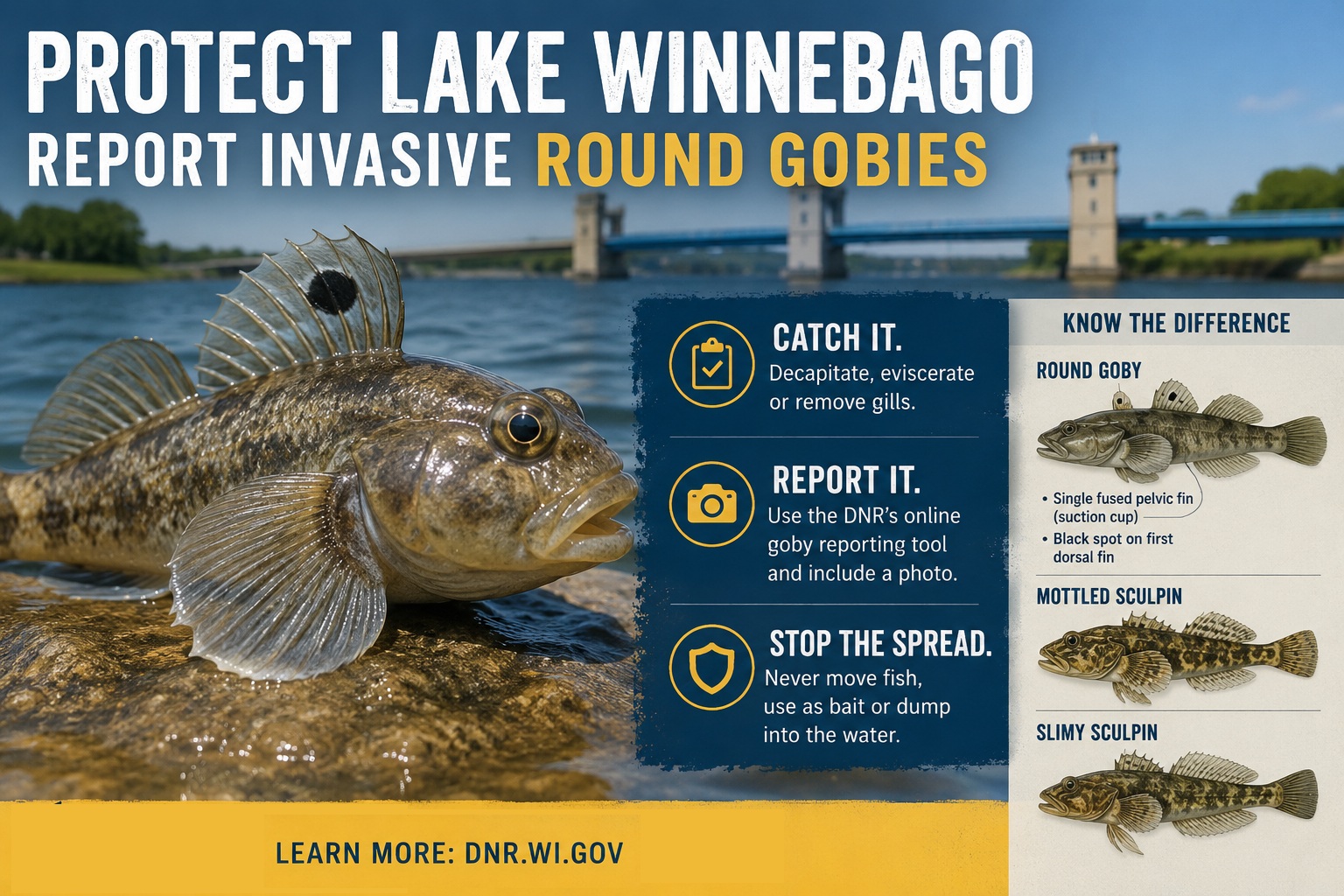
Anglers Asked to Report Any Gobies Caught in Lake Winnebago Waters
Three Things to Know
- A new emergency rule is now in effect allowing anglers to keep harvested round gobies in the Winnebago System if the fish are properly processed.
- A reproducing population has not yet been confirmed in Lake Winnebago, making angler reports especially important.
- If you catch a suspected round goby, report it immediately to help biologists track and limit the invasive species’ spread.
OSHKOSH, Wis. — Wisconsin anglers fishing the Winnebago System are being asked to help track an invasive fish species after a new emergency rule took effect June 19.
The Wisconsin Department of Natural Resources recently approved an emergency regulation allowing anglers to keep harvested round gobies from the Winnebago System, provided the fish are decapitated, eviscerated or have their gills removed.
The rule will remain in effect through Nov. 16, 2026.
The action comes after the first confirmed round goby was reported in Lake Winnebago on June 2, 2025. Since then, several additional gobies have been reported by anglers. Fisheries biologists say a reproducing population has not yet been established in the Winnebago System, making angler reports critical for monitoring the species’ spread.
“Angler harvest and reporting of all gobies taken will serve as a critical tool for tracking the presence of round gobies in the Winnebago System,” the DNR said.
Why Round Gobies Matter
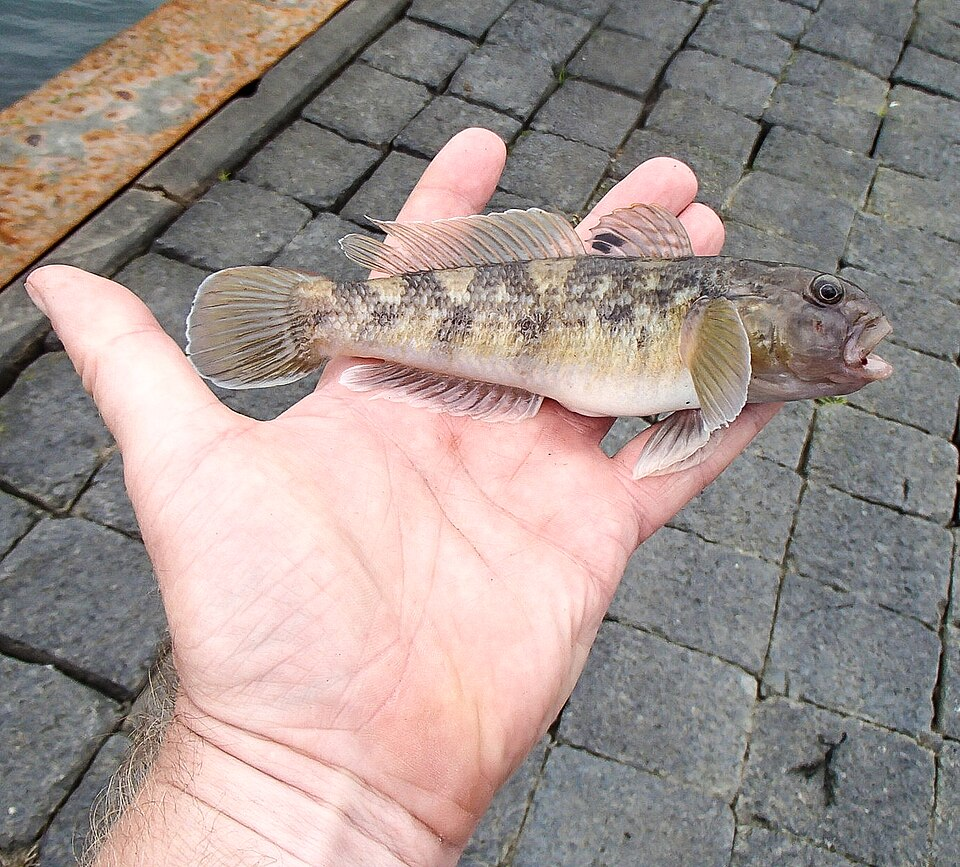
Round gobies are an aggressive invasive fish native to eastern Europe and western Asia. They were first discovered in the Great Lakes during the early 1990s and have since spread throughout much of the Great Lakes basin and connected waterways.
The species reproduces rapidly, tolerates poor water quality and can outcompete native fish for food and habitat. Biologists are concerned that established populations could negatively impact native fish communities throughout the Winnebago System.
Round gobies were discovered in Little Lake Butte des Morts in 2015. In response, the Fox River Navigational System Authority closed the Menasha Lock to help prevent the species from reaching Lake Winnebago.
Until the 2025 angler report, no confirmed sightings had been recorded upstream of the Menasha and Neenah dams. The DNR continues to consider those structures, along with the closed Menasha Lock, vital barriers to slowing the species’ spread.
What To Do If You Catch One
Anglers who believe they have caught a round goby in the Winnebago System should:
- Decapitate, eviscerate or remove the gills from the fish.
- Report the catch to the DNR using the agency’s online goby reporting tool.
- Submit photos to help fisheries staff verify the identification.
- Alternatively, freeze the specimen or place it on ice and bring it to the DNR’s Oshkosh office for identification.
The DNR notes that gobies caught downstream of the Menasha or Neenah dams, in Little Lake Butte des Morts, Green Bay or Lake Michigan do not need to be reported because established populations already exist in those waters.
Help Prevent the Spread
Officials say prevention remains the most effective defense against invasive species.
Under Wisconsin law, round gobies are classified as a restricted species and cannot be transported, transferred or introduced into new waters unless they have been decapitated, eviscerated or had their gills removed.
The DNR also reminds anglers to:
- Never use round gobies as bait.
- Never move fish between lakes or waterways.
- Never dump unused bait into the water.
Once invasive species become established, eradication is often impossible, making early detection and public reporting essential to protecting Wisconsin’s fisheries.
Want to plan that fishing trip? Head to our Forecast Page!
