

Wildfire smoke is returning to Wisconsin this weekend, bringing unhealthy to very unhealthy air quality through Monday. Here’s what you need to know.
3 Things to Know
- Smoke returns: Wildfire smoke will overspread Wisconsin this weekend, with the worst conditions expected Sunday.
- Health impacts: Air quality may reach Unhealthy (Red) or Very Unhealthy (Purple) levels, especially in northeastern Wisconsin.
- Plan ahead: Limit time outdoors, keep windows closed and reduce strenuous activity until air quality improves.
Another surge of wildfire smoke is expected to blanket Wisconsin this weekend, prompting the Wisconsin Department of Natural Resources (DNR) to issue an Air Quality Advisory through noon Monday.
Smoke from Canadian wildfires will spread south across the state Saturday before becoming widespread by Sunday morning. Air quality is expected to range from Unhealthy (Red) across much of Wisconsin to Very Unhealthy (Purple) in some locations, especially across northeastern parts of the state.
The advisory includes all of southeastern Wisconsin, including Milwaukee, Waukesha, Racine, Kenosha, Madison, Sheboygan, Fond du Lac, Washington, Ozaukee and surrounding communities.
When Will the Smoke Arrive?
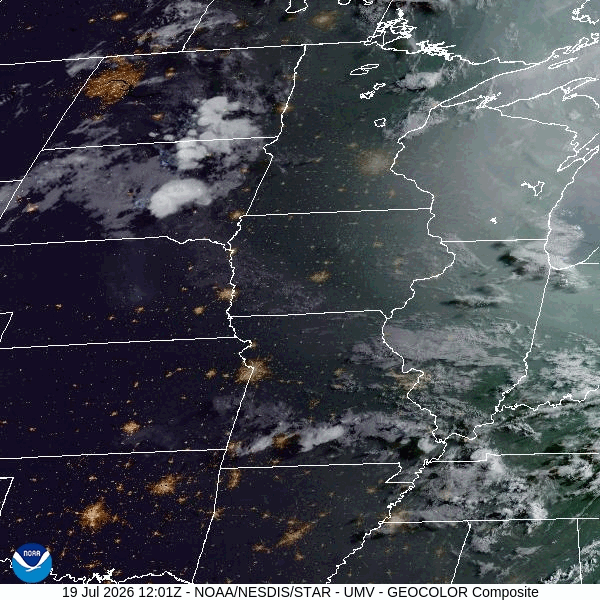
The latest forecast indicates smoke will gradually move south throughout Saturday.
- Southwestern Wisconsin may not see the thickest smoke until overnight Saturday.
- By late Sunday morning, smoke is expected to impact nearly the entire state.
- Poor air quality is expected to linger through at least noon Monday.
Air Quality Could Reach Dangerous Levels
https://www.weather.gov/grb/Smoke
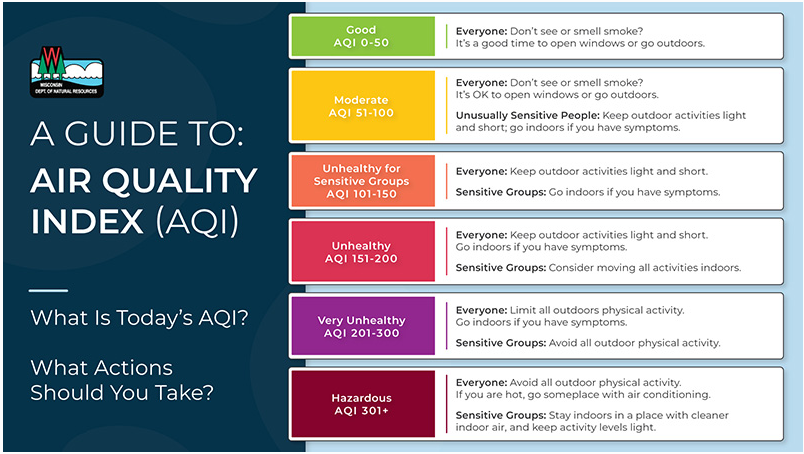
The DNR expects fine particle pollution (PM2.5) to reach:
- Red (Unhealthy): Air quality unhealthy for everyone, with greater impacts on sensitive groups.
- Purple (Very Unhealthy): Health alert conditions where everyone should reduce outdoor exposure.
These tiny particles can penetrate deep into the lungs and even enter the bloodstream, increasing the risk of respiratory and cardiovascular problems.
Who Is Most at Risk?
The greatest health concerns are for:
- Children
- Older adults
- Pregnant people
- Anyone with asthma, COPD or other lung diseases
- People with heart disease
If you have asthma, keep rescue medication nearby and follow your asthma action plan.
People with heart disease should seek medical attention if they experience chest pain, irregular heartbeat, unusual fatigue or shortness of breath.
How to Protect Yourself
During periods of poor air quality:
- Stay indoors as much as possible and keep windows closed.
- Run your air conditioner on recirculate if available.
- Limit strenuous outdoor activities.
- Consider moving outdoor events indoors or rescheduling them.
- If you must be outside for an extended period, a properly fitted N95 respirator can help reduce smoke exposure.
Even healthy individuals may experience eye irritation, coughing or difficulty breathing after prolonged exposure. You can monitor and advisories or warnings on our live stream page: WWN LIVE STREAM
Bottom Line
This is another significant round of Canadian wildfire smoke affecting Wisconsin. Air quality is expected to worsen through Saturday night, become widespread on Sunday and remain poor into Monday. If you notice smoky skies or smell smoke outdoors, it’s a good idea to limit your time outside until conditions improve.
Residents should continue monitoring local air quality conditions throughout the weekend, especially if they have underlying health conditions.
