

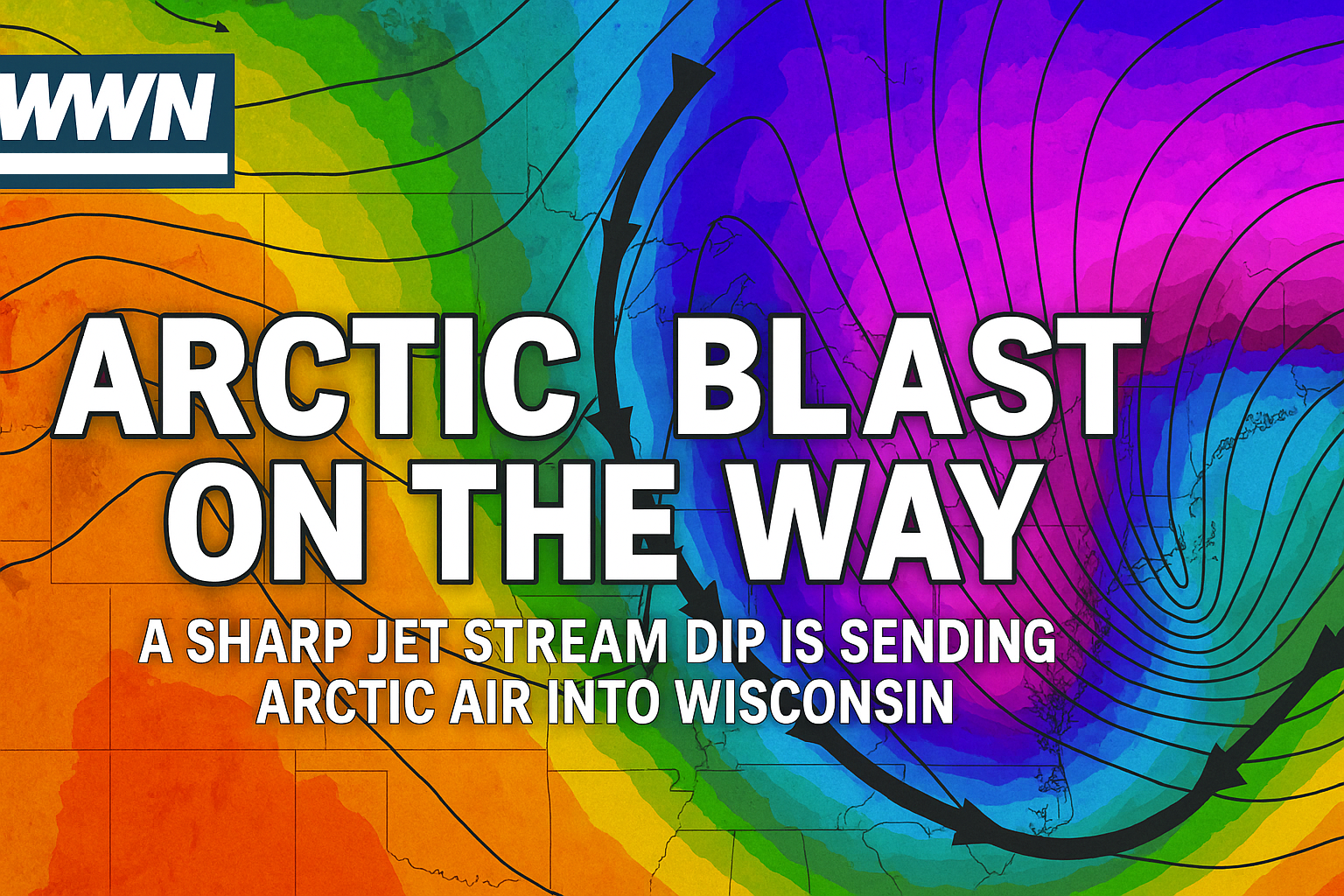
A sharp jet stream dip is sending Arctic air into Wisconsin. Learn how this “polar plunge” forms and when temps will finally warm up.
An amplified jet stream pattern over the eastern half of the United States is to blame for the frigid air now gripping much of the country — and yes, Wisconsin is feeling every bit of it.
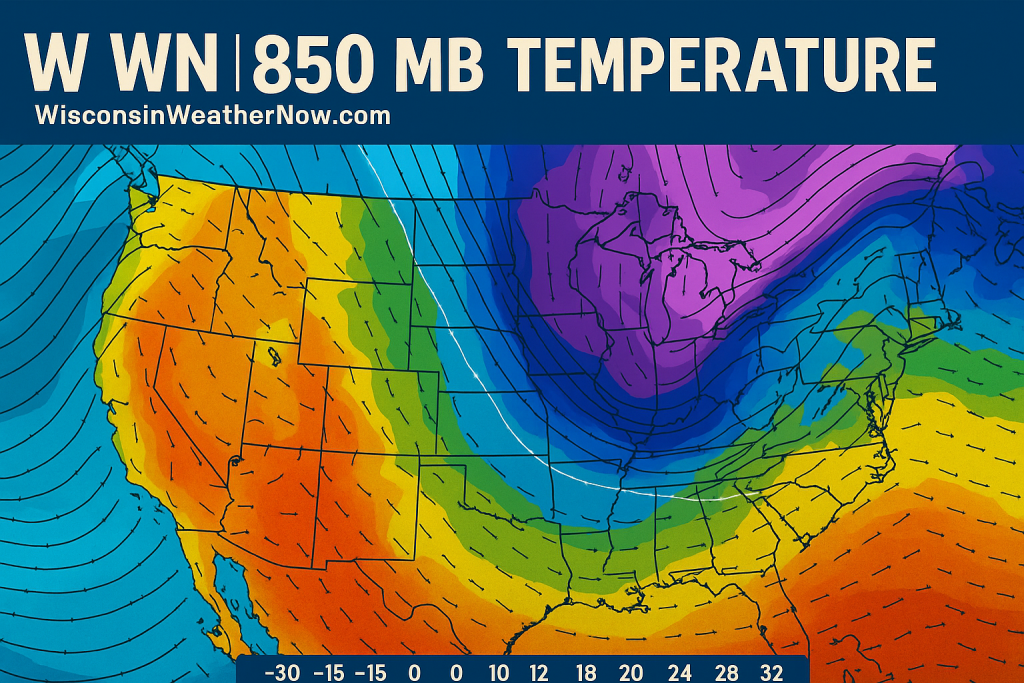
A deep upper-level trough centered near the Ohio Valley has opened the door to a direct stream of continental polar air from Canada. That cold flow, funneled by strong northwesterly winds, is driving temperatures 10 to 20 degrees below normal across the Great Lakes. While the record-setting cold is focused farther south, this same air mass is chilling Wisconsin mornings into the teens and low 20s.
A Roller-Coaster Jet Stream
The jet stream — the high-altitude river of air that steers storms — has taken on a sharp dip, or trough, over the eastern U.S. and a pronounced ridge over the West. This amplified pattern acts like a giant atmospheric seesaw, sending Arctic air south while warm Pacific air floods the Rockies and Plains.
Meteorologists call it a “high-amplitude wave,” and when it locks in place, regions like Wisconsin stay cold until the upper-air winds flatten out again.
Lake Effect and Local Impacts
The same northwest winds feeding the cold are also producing lake-effect flurries and light snow showers along Lake Michigan and Lake Superior. While the heaviest snow bands are hammering parts of Michigan and New York, southeastern Wisconsin could see brief bursts of flakes through midweek.
Wind chills will stay in the teens during early mornings, making it feel more like mid-December than mid-November. Energy use will spike as furnaces work overtime, and early commuters should watch for icy patches on untreated roads.
A Brief Warm-Up Ahead
By mid- to late week, the jet stream should relax as upper-level ridging pushes east. That will allow temperatures in Wisconsin to rebound closer to seasonal norms — highs near 40 to 45 degrees — before another system approaches this weekend.
So, while the Deep South deals with frozen orange groves and icy roads, Wisconsin gets the bragging rights of surviving yet another early-season polar plunge — with snowflakes for flair.
