

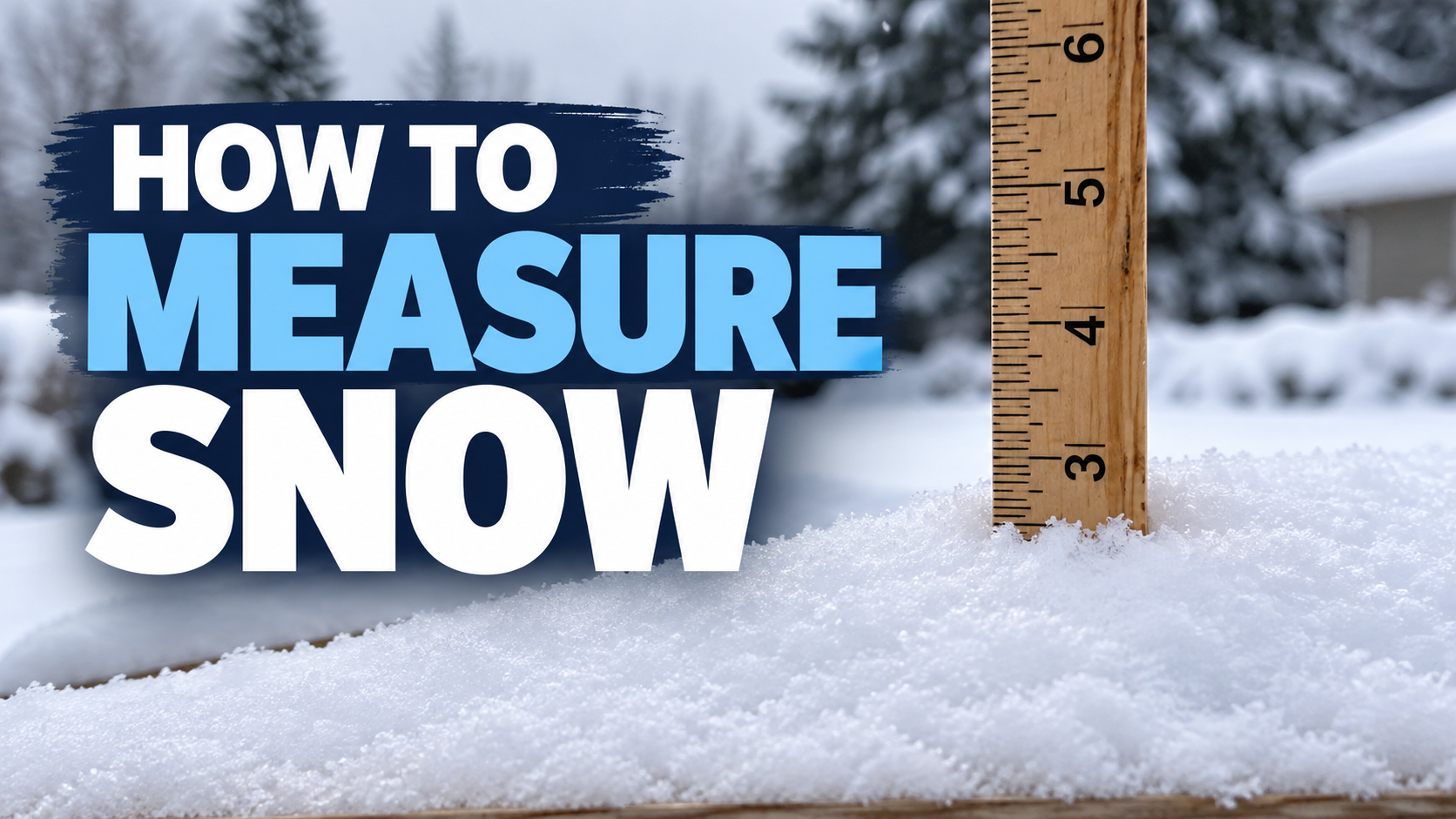
3 Things to Know
- LOCATION MATTERS: Measure in an open, representative area away from buildings, trees and large snow drifts.
- MEASURE NEW SNOW TO THE TENTH: Use a ruler or yardstick and record snowfall to the nearest tenth of an inch, such as 3.3 inches.
- SNOWFALL ISN’T SNOW DEPTH: Snowfall measures newly fallen snow, while snow depth measures all the snow currently on the ground.
When the snow starts piling up in Wisconsin, one question inevitably follows: How much did you get? It sounds simple. Stick a ruler in the snow and read the number, right? Not quite.
Wind, drifting, melting and even where you put the ruler can dramatically affect your measurement. If you want a snowfall total that can actually be compared with reports from the National Weather Service and other observers, there is a right way to do it.
Here is how to measure snow like a weather observer.
What You’ll Need
You don’t need expensive weather equipment. Two basic tools will do the job:
- A yardstick or snow measuring stick
- A flat, light-colored snow board
The National Weather Service recommends a snow board roughly 2 feet square. A piece of plywood painted white works well.
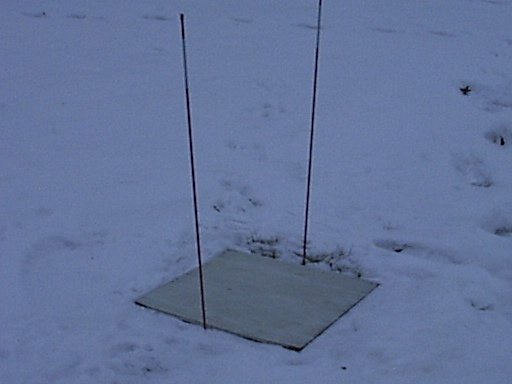
Don’t have a snow board? A flat picnic table or deck can work. You can also measure directly on the ground if the area has short grass.
Location Matters
Finding the right spot may be the most important part of getting an accurate measurement.
Choose an open area where the snow is falling naturally and drifting is minimal.
Avoid measuring:
- Next to buildings
- Under trees
- Beside fences or other obstacles
- In obvious snow drifts
- In areas that have been shoveled, plowed or otherwise disturbed
Wind can move a surprising amount of snow. One side of your yard could have 3 inches while a drift a few feet away is more than twice that deep.
If drifting is unavoidable, take several measurements in representative locations away from the largest drifts and calculate an average.
How to Measure New Snowfall
Place your snow board in your chosen location before the snow begins. Mark it with a flag or stake so you can find it once everything turns white.
When it is time to measure:
- Push the ruler or yardstick straight down into the snow until it reaches the board.
- Keep the ruler perpendicular to the ground.
- Read the snowfall to the nearest tenth of an inch. For example, you might record 3.3 inches.
- Record the measurement.
- Clear the snow from the board and place the board back on top of the existing snowpack.
Continue keeping track of each measurement during the storm. Adding those measurements together gives you the storm-total snowfall. The National Weather Service recommends measuring new snowfall when the snow stops, when possible, and no more than four times per day.
Our Favorite Snow Sticks
Here are our recommendations for decorative but functional snow sticks for your home!
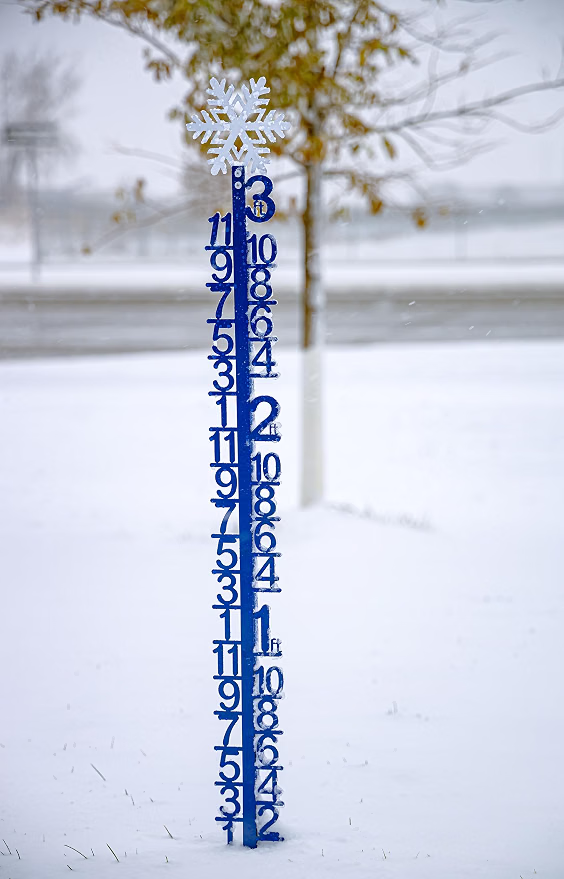
SWEN Products Steel Snow Flake Snow Gauge Measuring Stick Blue Powder Coat

La Crosse 139-4686 24 Inch Metal Snow Gauge
Snowfall and Snow Depth Aren’t the Same Thing
This is an important distinction.
Snowfall measures how much new snow has fallen during a specific period. It is reported to the nearest tenth of an inch.
Snow depth measures all the snow currently on the ground, including snow left from previous storms. Snow depth is normally reported to the nearest whole inch.
So a storm could produce 5.2 inches of new snow while the total snow depth on the ground is 9 inches.
Compaction and melting also mean that adding daily snowfall measurements won’t necessarily equal the snow depth on the ground.
The Biggest Snow-Measuring Mistake
Don’t hunt around the yard looking for the biggest number.
That 11-inch drift against the garage may look impressive, but if most of the yard has 5 inches, you didn’t receive 11 inches of snow. The goal isn’t to find the deepest snow. It’s to find the measurement that best represents how much snow actually fell.
And the next time someone asks, “How much snow did you get?” you’ll have something better than a guess from looking out the kitchen window.
Follow our Forecast Page for upcoming snowfall forecasts.
