

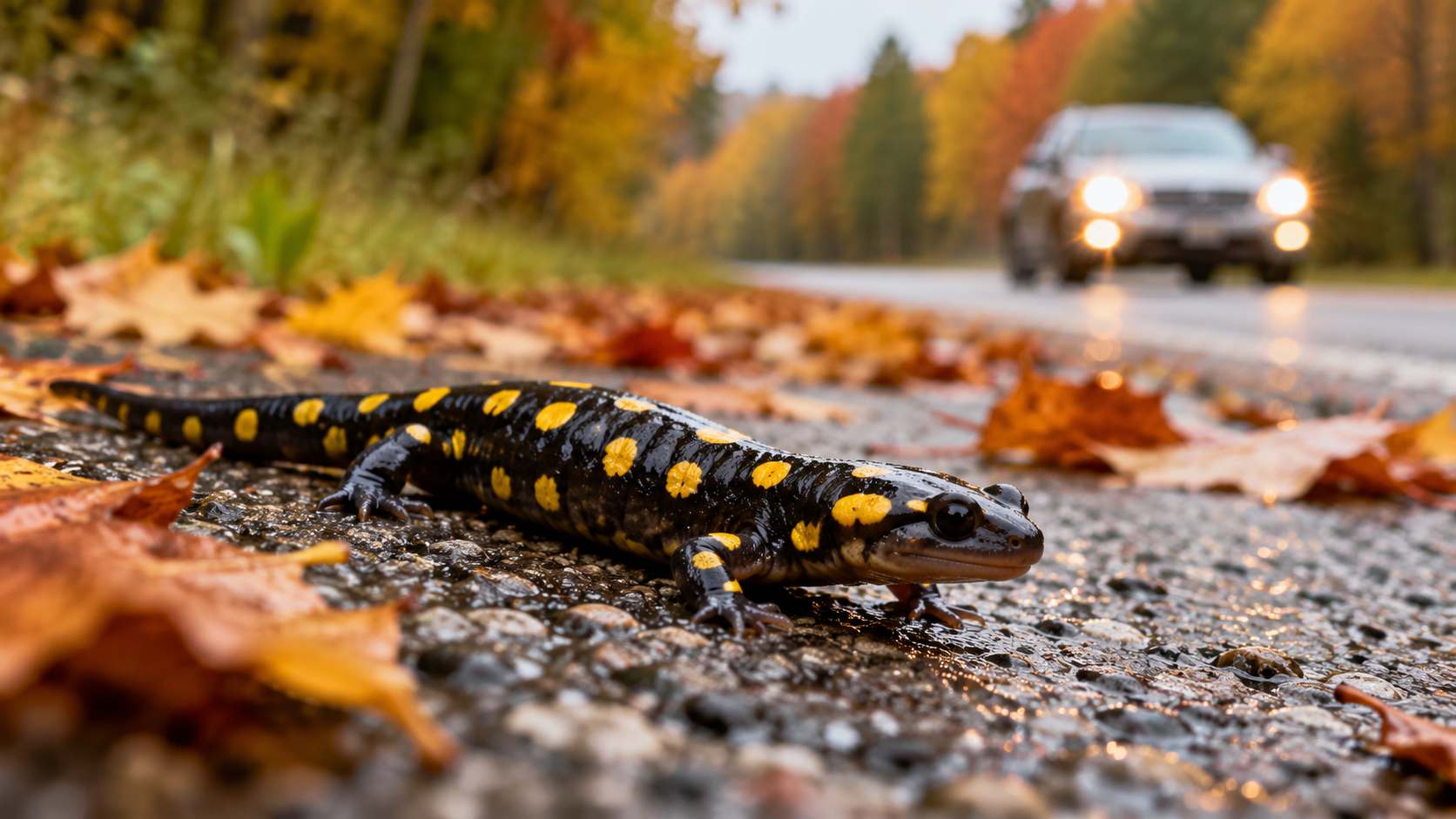
MADISON, Wis. — As temperatures cool across Wisconsin, drivers may want to keep an extra eye on the road for some small travelers making their seasonal move. The Wisconsin Department of Natural Resources is asking people to watch for and report frogs, salamanders, lizards, turtles and snakes crossing Wisconsin roads during late summer and early fall.
The seasonal change in temperatures prompts many reptiles and amphibians, collectively known as herptiles, to move from their summer breeding and feeding areas toward places where they will spend the winter.
That journey can put them directly in the path of traffic.
Cooler Weather Puts Reptiles On The Move
Road crossings aren’t the only concern.
According to the DNR, snakes and lizards sometimes use roads and trails as places to warm themselves as temperatures fall. The relatively warm surfaces can be attractive to cold-blooded animals, but spending time on a roadway puts them at risk of being struck by vehicles.
“Many reptiles and amphibians are hit by cars on roadways each year,” DNR conservation zoologist Rich Staffen said. “We are trying to minimize this mortality, and the public can help by reporting where they are seeing this happen.”
Those reports can help scientists identify locations where large numbers of animals are being struck and determine where mitigation efforts could reduce deaths.
See One? Report It
The DNR is asking drivers and trail users to report both live road crossings and animals killed on roads.
Photos are encouraged when possible.
Sightings can be submitted through the DNR’s Reptile and Amphibian Mortality Reporting Form. The agency also maintains a separate Turtle Reporting Form for turtle crossings.
The information gives wildlife managers a better picture of where populations occur and which roads may pose the greatest threat.
Drivers should prioritize their own safety and the safety of others. Avoid sudden stops or dangerous maneuvers when encountering wildlife on a roadway.
More Than Half Of Wisconsin’s Reptiles Face Conservation Concerns
Road mortality is particularly important because many of Wisconsin’s reptile species are already considered endangered, threatened or species of special concern.
Here’s how Wisconsin’s reptile and amphibian populations break down, according to the DNR:
| Group | Species In Wisconsin | Rare Species |
|---|---|---|
| Frogs and toads | 12 | 3 (25%) |
| Salamanders | 7 | 1 (14%) |
| Lizards | 4 | 3 (75%) |
| Turtles | 11 | 4 (36%) |
| Snakes | 21 | 13 (62%) |
The numbers are particularly notable for snakes and lizards. Thirteen of Wisconsin’s 21 snake species, or 62%, are considered rare, while three of the state’s four lizard species fall into that category.
The DNR defines a species of special concern as one with a declining population that is in need of conservation action.
The Bottom Line
Cooler fall weather means more than changing leaves and chilly mornings. It also means some of Wisconsin’s smallest wildlife is on the move.
Drivers should watch carefully for turtles, snakes, salamanders, frogs and other animals crossing roads as temperatures fall.
Reporting those encounters, whether the animal makes it safely across or is found dead on the roadway, can help the DNR identify trouble spots and develop strategies to protect Wisconsin’s reptile and amphibian populations.
More information about Wisconsin reptiles and amphibians, including ways to support conservation efforts, is available through the Wisconsin Department of Natural Resources.
