

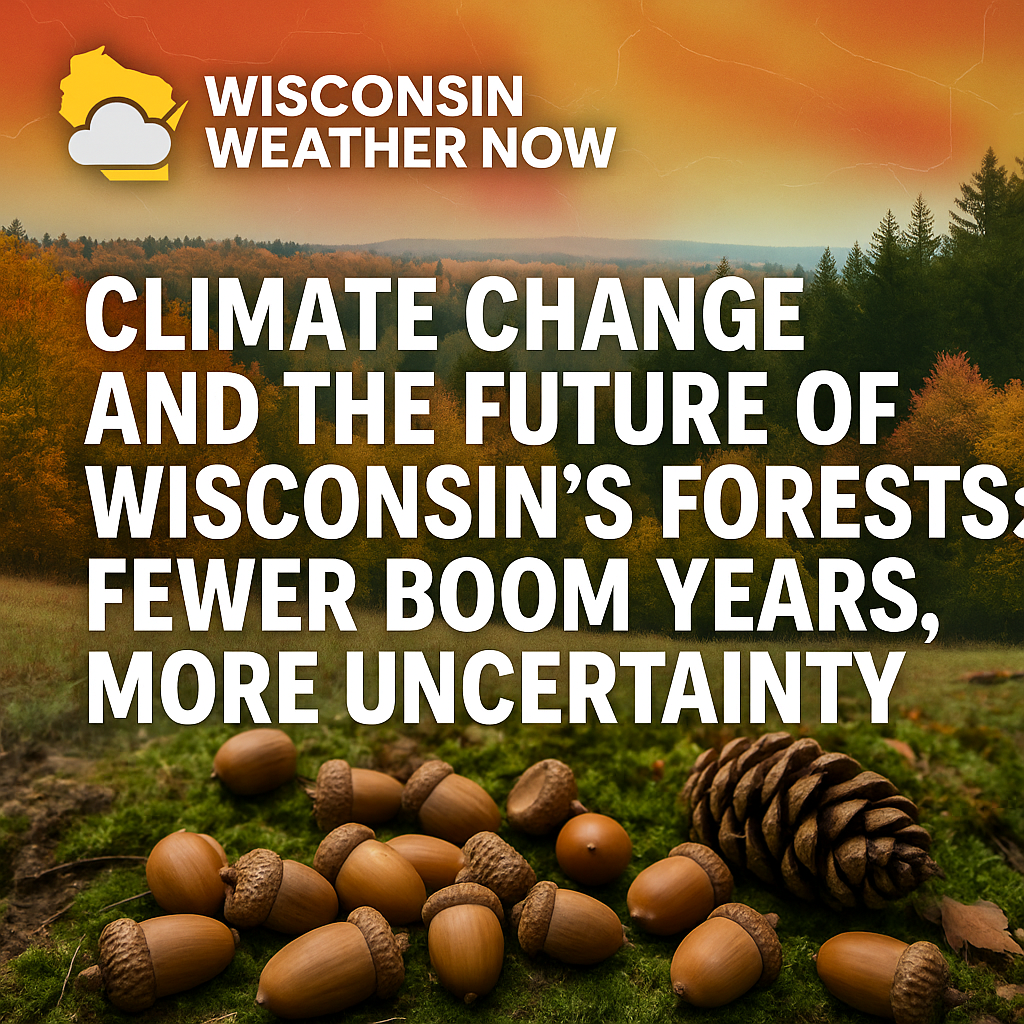
New research finds rising temperatures are disrupting how trees reproduce.
MADISON, Wis. – The natural “boom-and-bust” rhythm of Wisconsin’s forests, those years when oak trees drop endless acorns or maples fill the air with seeds, may be changing. New research published in Nature Communications finds that rising temperatures are disrupting the weather cues that tell trees when to reproduce, potentially leading to fewer synchronized “mast years” across the Great Lakes.
Scientists call the phenomenon masting, the tendency of trees and shrubs to produce massive seed crops only in certain years. The study analyzed 746 populations of perennial plants worldwide, including temperate and boreal forests similar to Wisconsin’s. Researchers found that temperature, not rainfall, is the dominant trigger for seed production. And that makes northern ecosystems especially sensitive to warming.
“In the Midwest, our mast years are linked to warm summers followed by mild springs,” said study coauthor Andrew Hacket-Pain of the University of Liverpool. “Climate change is disrupting those cues.”
What It Means for Wisconsin
Forests that rely on masting — including oak, maple, and pine — help support entire food webs. Deer, bears, and squirrels depend on the seed surges, while the years in between control rodent populations and forest regeneration. If warming makes favorable seed years more frequent, trees may deplete their stored energy and produce smaller, weaker crops in the long term.
That could ripple through Wisconsin’s ecology, from reduced wildlife forage to increased vulnerability to pests and disease. The DNR’s Forest Health team has already noted inconsistent acorn crops over the last decade, a local echo of what researchers now confirm globally.
The Science Behind the Shift
In temperate regions, the study found, trees are “hypersensitive” to temperature variation. Even small changes can alter reproductive timing by several months. Historically, those cycles helped synchronize pollination and seed dispersal. But as average summer temperatures rise, the cues for reproduction may fire too often, reducing the very synchrony that masting depends on.
“It’s like trees are losing their internal calendar,” the study notes. “They’re responding to signals that used to be rare but are now common.”

Why It Matters
Fewer synchronized mast years could lead to cascading effects, from food shortages for wildlife to shifts in forest composition. Oak and beech seedlings might struggle to regenerate, while invasive species that don’t rely on temperature cues could gain ground. Even Wisconsin’s climate-adaptive forestry plans may need to adjust as the natural timing of reproduction changes.
A Global Signal, a Local Story
The research also connects to the broader climate conversation in Wisconsin: how subtle changes in seasonal timing can transform the landscape. A few degrees of warming might mean longer growing seasons for crops, but for forests, it could mean losing the steady rhythm that’s defined them for centuries.
For now, scientists are calling for closer monitoring of mast years across the Upper Midwest. The next time you notice your yard buried in acorns, it might be more than a nuisance, it could be a sign of the changing climate right in your backyard.
