

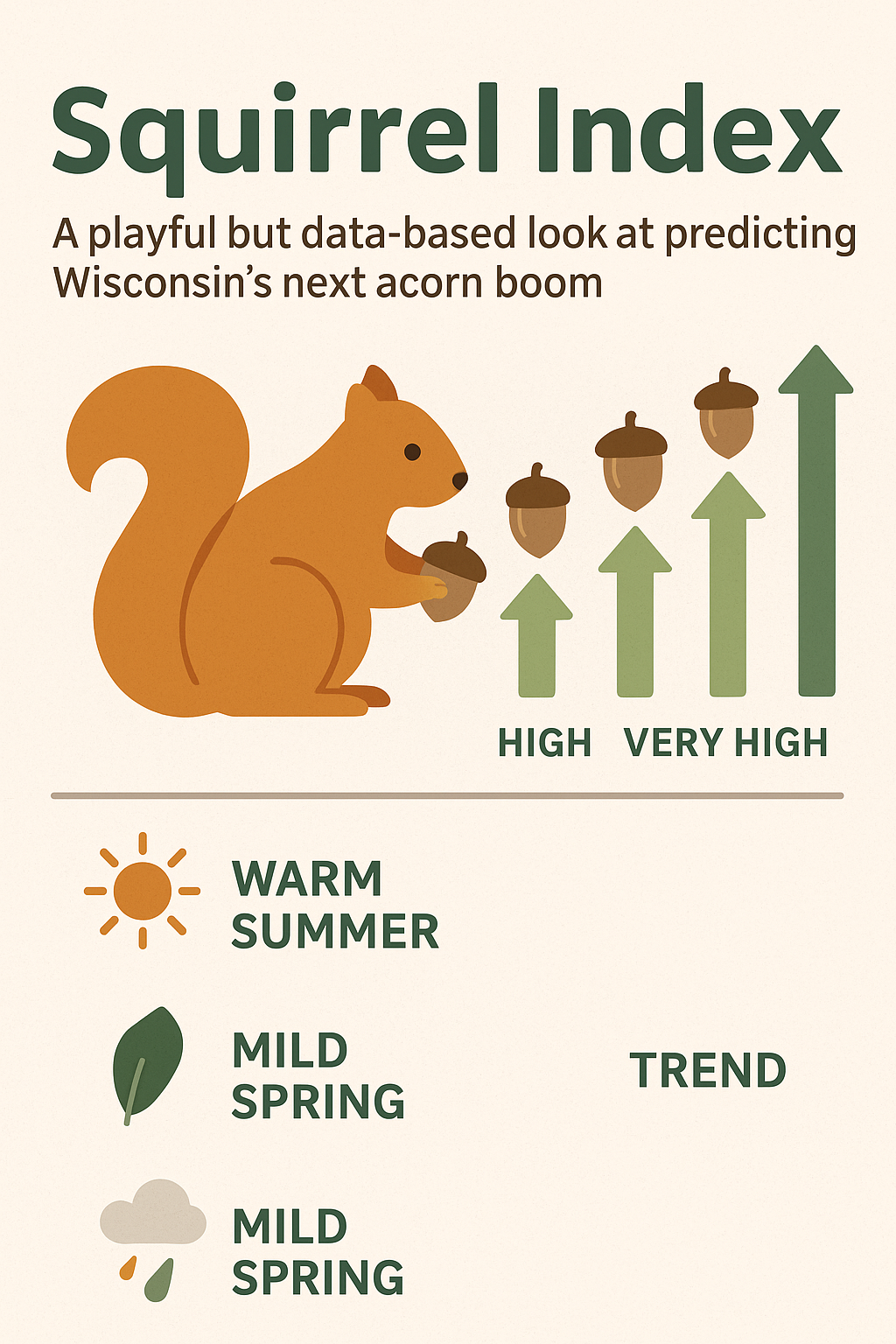
Scientists are learning to predict Wisconsin’s acorn surges and squirrel booms using temperature data and new “squirrel forecast” computer models.
MILWAUKEE, Wis. – If you’ve ever noticed a year when squirrels seem extra busy, or your driveway’s buried in acorns, you’ve witnessed a “mast year.” These big seed surges happen when trees like oaks and maples all reproduce at once. Now, new research suggests we may soon be able to use a special forecast model to predict when Wisconsin’s next squirrel boom will hit.
A study in Nature Communications found that temperature is the main cue driving seed production across temperate forests, including those in the Great Lakes region. Using what’s called a “moving window” analysis, scientists tracked how changes in summer and fall temperatures affect trees’ reproductive cycles year to year.
“We can now pinpoint when trees are most likely to produce heavy crops of acorns or maple seeds,” said coauthor Michał Bogdziewicz of Adam Mickiewicz University. “It’s a weather-driven process and that means we can forecast it.”
From Weather Data to Wildlife Behavior
The research examined 746 plant populations around the world, but its implications hit close to home. In Wisconsin, oak trees respond most strongly to warm summers followed by mild springs, conditions that promote flowering and seed set.
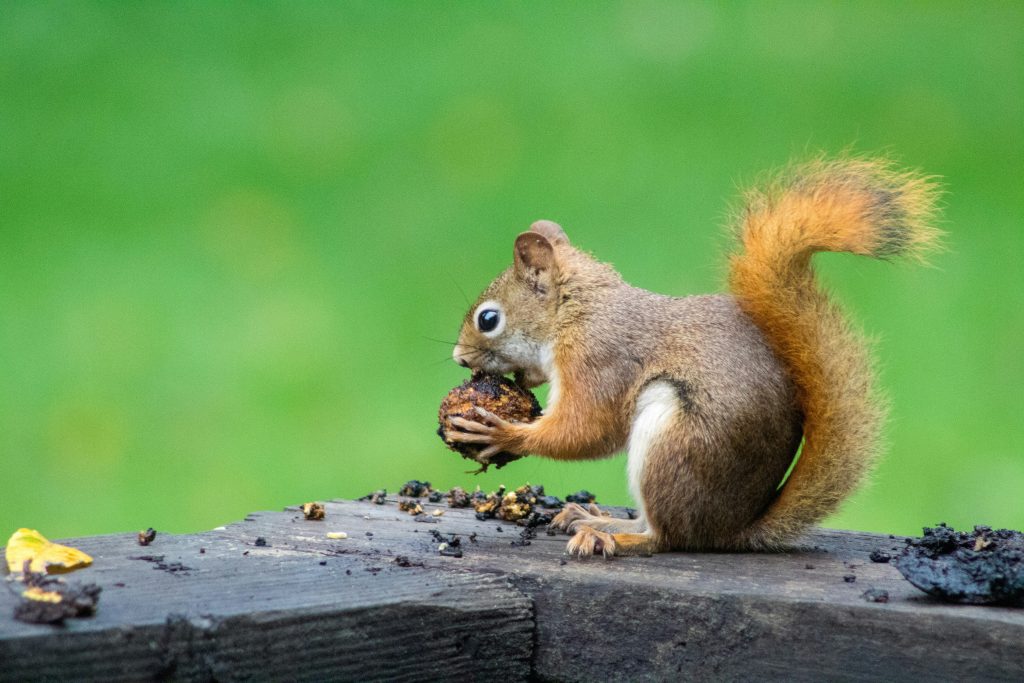
When those patterns align, forests produce a bumper crop of seeds, feeding everything from deer and bears to chipmunks and blue jays. The result? A squirrel population explosion the following fall as wildlife gorges on the abundance.
With climate change altering Wisconsin’s temperature cycles, these “mast years” could become more frequent, but less predictable. Scientists warn that if trees produce too often, they may run out of stored energy, leading to weaker crops and more erratic wildlife patterns.
A New Forecasting Tool
Using temperature trends, researchers hope to develop a “squirrel index”, a playful but science-based model that would show the likelihood of an acorn boom across the state.
Foresters could use it to manage wildlife habitats, while homeowners might use it to plan for extra leaf-blower duty.
“It’s the same principle meteorologists use — analyzing past patterns to forecast future ones,” Bogdziewicz said. “Except this time, the prediction is for acorns instead of rain.”
A Changing Fall Forecast
Wisconsin’s mast cycles are a perfect example of how small shifts in seasonal timing can ripple through the ecosystem. If summers continue to warm, the balance between tree growth, reproduction, and wildlife food supply could change in ways we’re only beginning to understand.
So next time you hear squirrels chattering in the trees, think of it as nature’s version of a long-range forecast, and a reminder that even the smallest creatures are tracking the weather, too.
The original study is published in Nature Communications and can be accessed here:
🔗 https://doi.org/10.1038/s41467-025-64300-6
Full title: Weather drivers of reproductive variability in perennial plants and their implications for climate change risks
Authors: Valentin Journé, Dave Kelly, Andrew Hacket-Pain, Ian S. Pearse, Jakub Szymkowiak, Jessie J. Foest, and others (2025).
