

A national winter storm buried parts of the U.S. with heavy snow and ice. See the storm scoreboard, top snowfall totals, and why Wisconsin’s biggest impact is the extreme cold.
- Major January winter storm slammed the U.S. with 20+ inches of snow in parts of New England and the Northeast, plus crippling ice and sleet across the South.
- Ice was the real damage-maker, with some areas reporting over an inch of freezing rain and several inches of sleet—triggering power outages and dangerous travel.
- Wisconsin avoided the worst snow, but Arctic air behind the storm is driving bitter cold, dangerous wind chills, and lingering impacts.
While Wisconsin largely avoided the most extreme impacts of January’s major winter storm, much of the country did not. From heavy snow in New England to crippling ice and sleet across the South, this system delivered a little bit of everything — except a major hit here at home.
Still, the storm offers important context for Wisconsin residents as dangerous cold settles in behind it.
“This storm may not have been a Wisconsin blockbuster, but its aftermath absolutely matters here.”
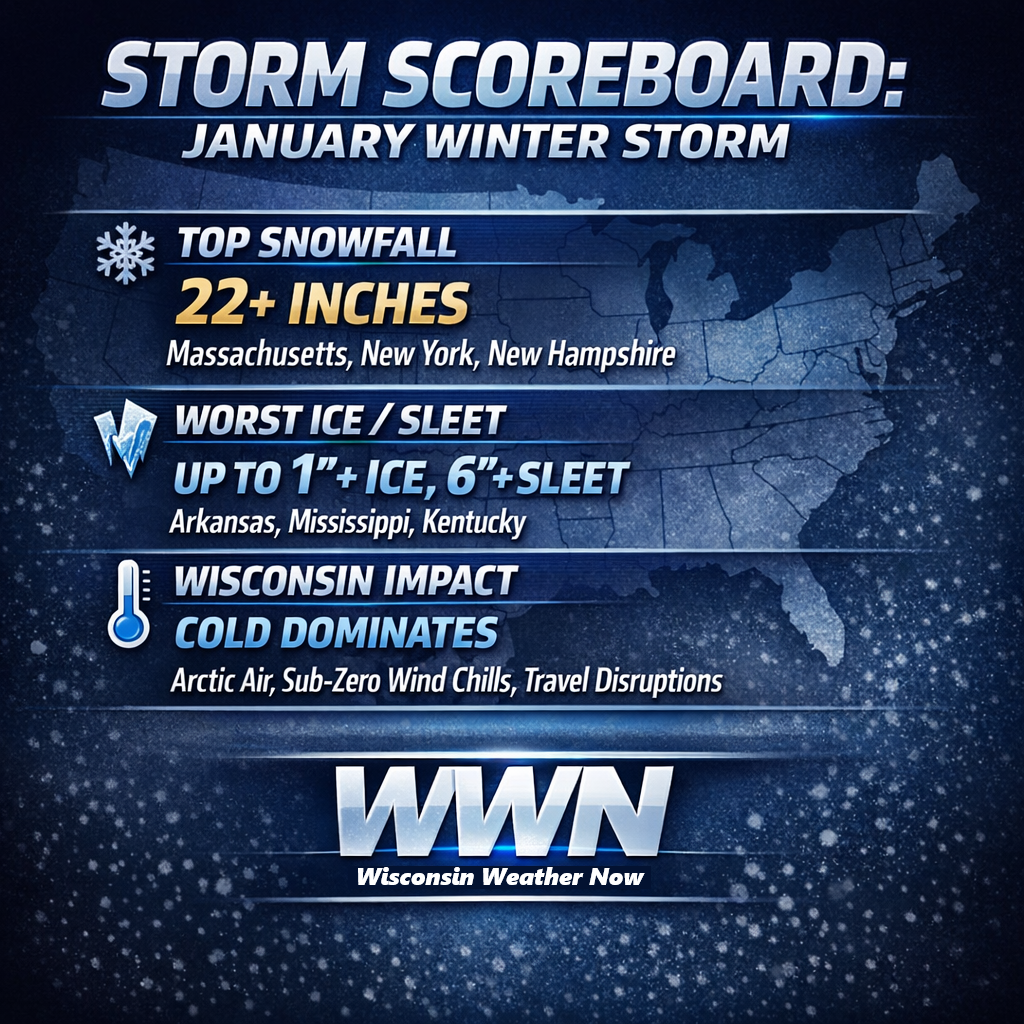
🏆 Storm Snowfall Scoreboard (Selected Highlights)
Some of the highest snowfall totals from the January 23–26 storm include:
- Massachusetts: Sterling topped the list with 22.2 inches
- New York: Multiple locations in the Catskills exceeded 22 inches
- New Hampshire: Stratham reported 21 inches
- Connecticut: Widespread totals near 18–19 inches
- Pennsylvania: Parts of western and central PA saw 20+ inches
Major East Coast metros like Boston, New York City, and Philadelphia all experienced significant disruptions, even where totals were lower.
“This was a long-duration storm — not just heavy snow, but persistent impacts over several days.”
🧊 Ice & Sleet: The Quiet but Costly Damage
While snow grabs headlines, sleet and freezing rain caused some of the most severe impacts.
- Arkansas: Over 6 inches of sleet in some locations
- Louisiana & Mississippi: Widespread sleet and ice
- Kentucky, Tennessee, Virginia: Significant icing and travel hazards
- Alabama & Georgia: Ice accumulations approaching or exceeding 1 inch
Ice of this magnitude leads to power outages, fallen trees, impassable roads, and long recovery timelines.
“In many places, ice — not snow — was the most dangerous part of this storm.”
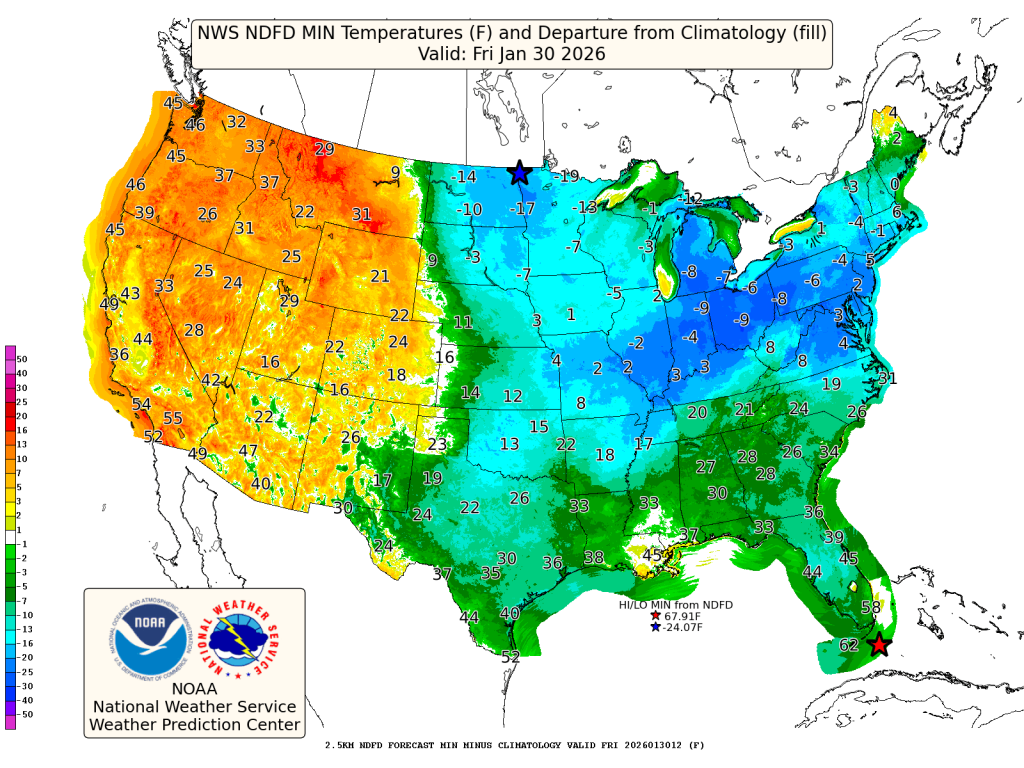
❄️ Meanwhile in Wisconsin: Cold Takes Center Stage
While the heaviest precipitation stayed south and east, Wisconsin is still very much part of this storm’s story — just on the backside.
As Arctic high pressure settles in:
- Temperatures struggle to rise above freezing
- Morning lows dip below zero in some locations
- Wind chills remain dangerous for outdoor exposure
The same cold air that shut down the storm on the East Coast is now locking in bitter conditions across the Midwest.
“For Wisconsin, the storm’s legacy isn’t snow totals — it’s the cold that follows.”
✈️ Why This Still Matters Locally
Even without big snow totals, Wisconsin residents may still feel indirect effects:
- Travel delays for flights connecting through Chicago, Detroit, or East Coast hubs
- Supply chain disruptions tied to hard-hit regions
- Extended cold impacts on pipes, vehicles, and infrastructure
It’s a reminder that winter storms don’t have to hit your backyard to affect daily life.
“Sometimes the biggest impacts arrive after the snow stops falling.”
Bottom Line
This was a national-scale winter storm with historic snowfall, extreme icing, and widespread disruption. Wisconsin may have avoided the worst precipitation — but the dangerous cold behind the storm is very real and very close to home.
As winter continues, this event offers a preview of how quickly conditions can change — and why preparation matters, even when the snow misses us.
