

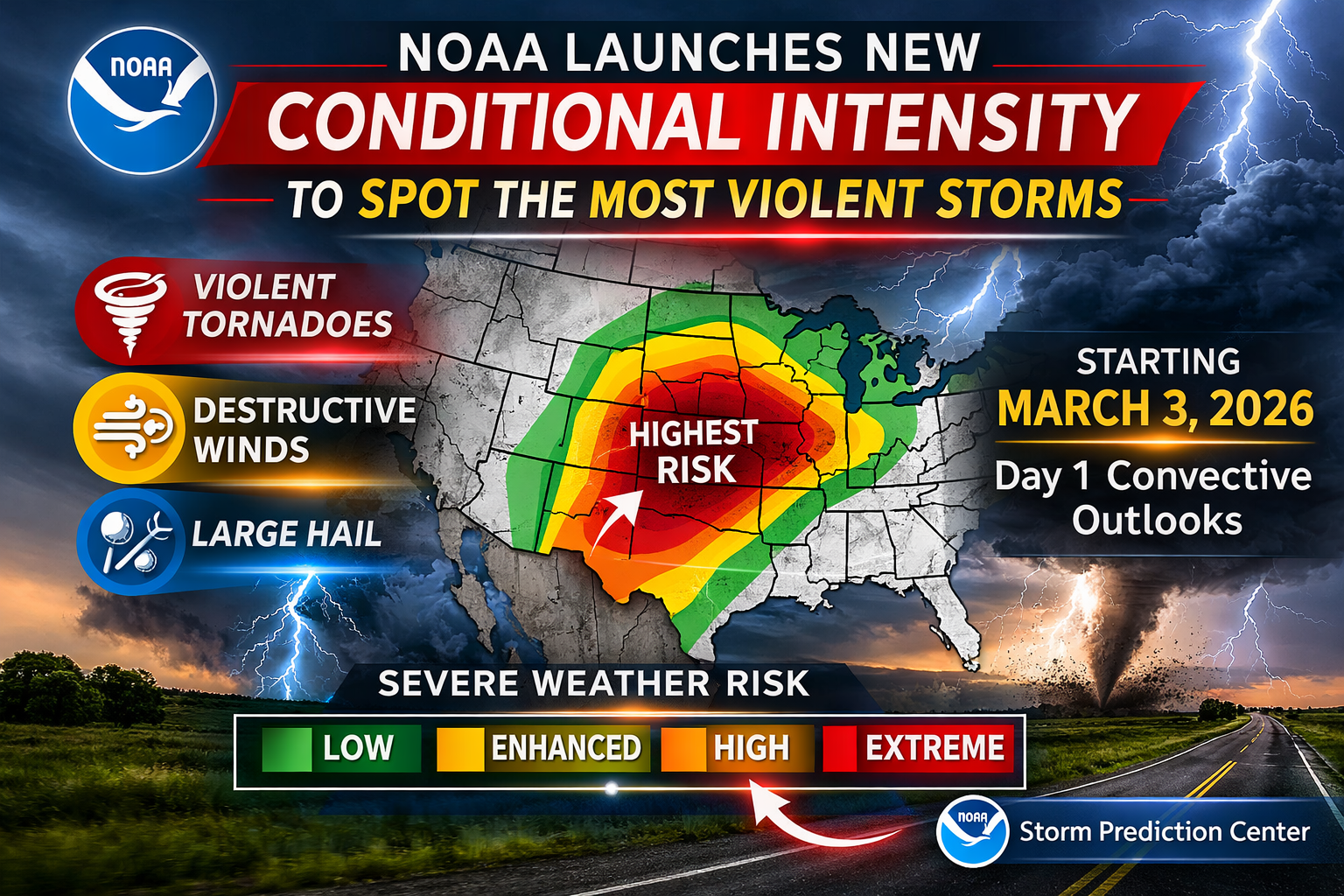
NOAA unveils new tool to better identify the most violent storms
NOAA’s new conditional intensity tool helps pinpoint the most violent storms, giving better warning of high-impact severe weather risks.
3 THINGS TO KNOW
- NOAA adds Conditional Intensity to highlight the most violent severe storms
- Tool separates storm coverage vs. storm severity, improving risk communication
- Launch begins March 3, 2026, in SPC Day 1 outlooks
A major upgrade is coming to how forecasters communicate severe weather risk — and it could make a big difference when it matters most.
Beginning in March 2026, NOAA’s Storm Prediction Center (SPC) is adding a new layer to its widely used Convective Outlooks called Conditional Intensity. The goal: better highlight when storms may be especially violent, even if they are not widespread.
For decades, SPC outlooks have focused on the coverage of severe weather, essentially how many storms are expected. But that doesn’t always tell the full story. Some of the most destructive events come from just a handful of storms that rapidly intensify and produce significant damage.
Conditional Intensity changes that by identifying areas where storms could become more extreme, including violent tornadoes, destructive winds, or large hail.
“High-end severe weather like intense and violent tornadoes cause by far the greatest loss of life and property,” said Evan Bentley of NOAA’s Storm Prediction Center. “Now, even when the probability of a severe hazard is low but the intensity is high, we can convey that threat.”
Why this matters for you
This new tool helps answer a critical question forecasters have long faced:
👉 Are we expecting a lot of storms — or just a few that could be dangerous?
- A day with many weaker storms may still show high coverage but low intensity
- A day with just one or two storms could now be flagged as high intensity — meaning higher-end impacts are possible
That distinction is key for emergency managers, first responders, and the public when making decisions about preparation and safety.
Years in the making
The concept of Conditional Intensity isn’t new — it has been tested for years.
- First explored during NOAA’s 2019 Spring Experiment in Norman, Oklahoma
- Tested operationally by forecasters since 2021
- Refined through real-world severe weather events
After more than four years of testing, forecasters have demonstrated skill in distinguishing between lower-end and high-end severe threats, paving the way for this official rollout.
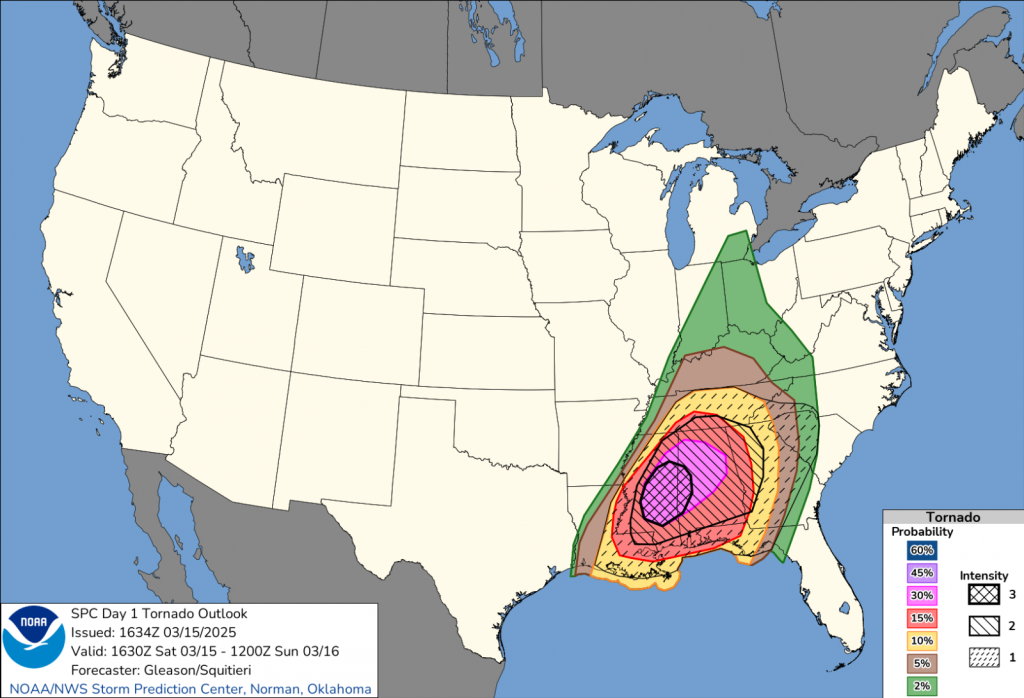
When you’ll start seeing it
Conditional Intensity will started appearing in Day 1 Convective Outlooks March 3, 2026 — giving forecasters a new way to communicate not just if storms will happen, but how bad they could get.
Bottom line
This is a meaningful step forward in severe weather communication — one that could help save lives by better highlighting those rare but dangerous setups where even a single storm can have major consequences.
